A few years ago, a home battery felt like a nice-to-have. Something you’d add once the panels had paid themselves off, and you had money left over. In 2026, that thinking has flipped. With evening electricity still the most expensive part of the day, and a federal discount that makes batteries far more affordable, plenty of Canberra households are asking the same question: which battery should we actually put on the wall?
The honest answer is that it depends on your home. But some options come up again and again for Canberra households, and the rules around rebates and loans have changed enough this year that it’s worth starting with the money side before getting into brands.
What’s different in 2026 in Canberra’s homes
The biggest change is the federal Cheaper Home Batteries Program. It gives households a discount of around 30% on the upfront cost of an eligible battery between 5 kWh and 100 kWh, delivered through small-scale technology certificates (STCs). Your installer usually takes it off the invoice, so you don’t chase a rebate later.
Here’s the catch. The program was so popular that the government reworked it, and the changes started on 1 May 2026. The support per kWh now drops every six months, in January and July, rather than once a year. It also tapers as batteries get bigger, so the sweet spot is a typical household battery, not the biggest unit on the shelf. In plain terms: the rebate is still strong, but waiting costs you. Each step down means slightly less discount for the same battery.
For Canberra households, there’s a second piece. The ACT’s Sustainable Household Scheme offers low-interest loans through Brighte, at 3% with up to 10 years to repay and no upfront fees. From 1 July 2026, new applicants can borrow up to $20,000; households who borrowed before that date have a $15,000 cap. One thing worth correcting if you’ve read older articles: this is a low-interest loan, not an interest-free one. Zero-interest loans are now limited to eligible concession card holders through the Home Energy Support Program.
Put the two together, and you can take the federal discount off the top, then finance what’s left over time. That stacking is still the cheapest way most Canberra homes will get a battery.
How to choose a battery that fits your home
Before comparing brands, work out what you’re actually trying to solve. Most people fall into one of three camps.
You want lower bills. Look at your evening usage. If your household uses most of its power after the sun goes down, a mid-sized battery that soaks up your daytime solar surplus will do the most work. Check your bill for how many kWh you use between roughly 4pm and 10pm, and size around that instead of guessing.
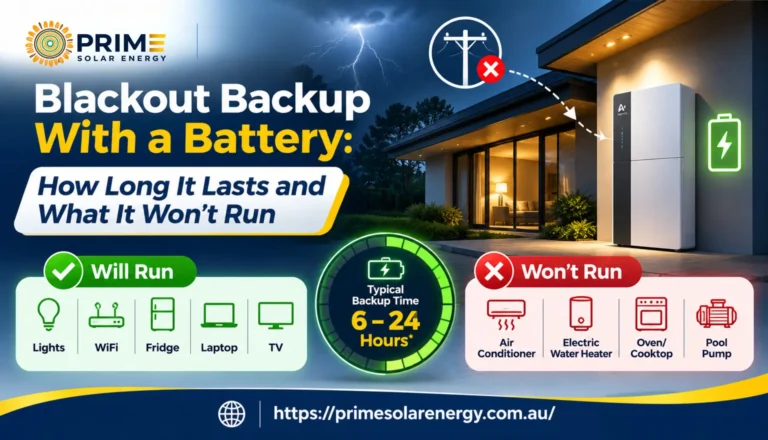
You want backup during outages. Not every battery gives you blackout protection out of the box. It needs the right inverter, isolation switches, and a decision about which circuits stay live. If backup matters to you, say so at the quote stage, because it changes the design.
You’re planning Maybe an EV is on the way, or you’re swapping gas heating for a heat pump. In that case, a modular or expandable system saves you from outgrowing the battery in three years. Most Canberra homes end up in the 10 to 13.5 kWh range, which also happens to be where the 2026 rebate structure gives the fullest support.
Popular battery options for Canberra
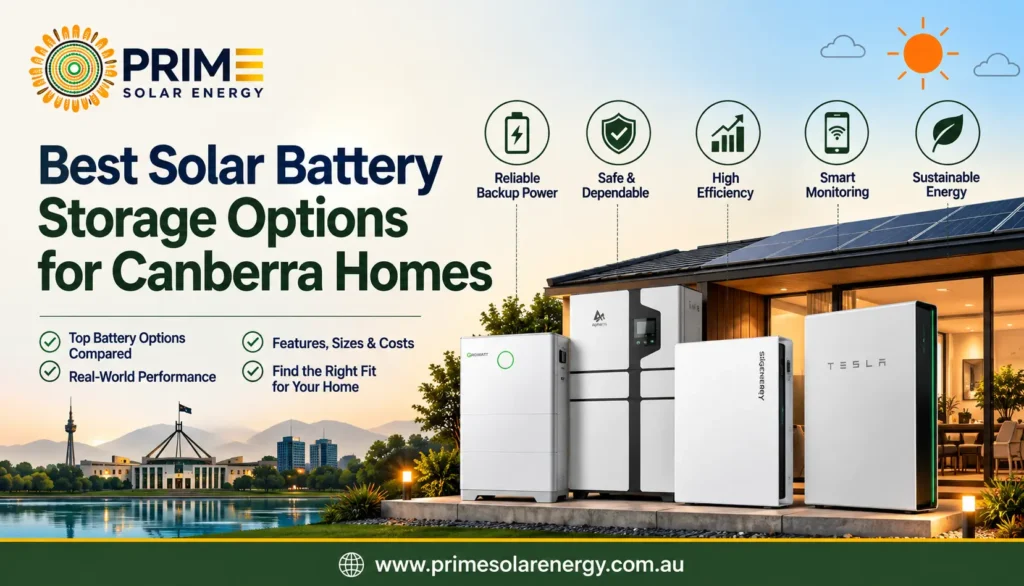
These are the brands we see most often when homeowners ask what suits Canberra. Specs and models change, so treat this as a starting point rather than a final answer.
Tesla Powerwall 3
Tesla Powerwall 3 is the one people already know, and for good reason. It uses LFP chemistry, which handles heat well and has a strong safety record, and it’s built around solid backup performance. If blackout protection is high on your list, it’s a serious contender. You can read more on our Tesla Powerwall page.
Sungrow SBR and SBH
Sungrow is the value pick that doesn’t feel like a compromise. The SBR and SBH families are high-voltage systems that suit a range of household sizes, and the monitoring platform makes it easy to see what your solar, battery and home are doing at any moment. Getting the system matching right matters here, especially phase type, inverter compatibility and switchboard condition. Our Sungrow battery page explains how we approach it.
Sigenergy
Sigenergy’s SigenStor has become one of the most talked-about systems in Australia over the last couple of years. It’s designed as an all-in-one platform, so the inverter, battery and EV charging options are meant to work together. That makes it attractive if you expect your energy use to grow.
GoodWe
If you already have solar and don’t want to rip out a perfectly good inverter, GoodWe’s retrofit-friendly hybrids are worth a look. They’re a practical way to add storage to an existing system without starting over.
Other brands worth knowing
Depending on your roof, budget, and goals, we also install Growatt, AlphaESS, and Fox ESS systems. Both AlphaESS and Fox ESS offer modular setups that can grow with you, and AlphaESS systems are commonly compatible with virtual power plant programs.
Quick comparison
| Brand | Best for | Worth knowing |
| Tesla Powerwall 3 | Backup power and brand familiarity | LFP chemistry, strong outage performance |
| Sungrow SBR/SBH | Balanced value and monitoring | System matching matters |
| Sigenergy | Future growth, EV plans | All-in-one platform |
| GoodWe | Adding to existing solar | Retrofit-friendly hybrids |
| Fox ESS / AlphaESS | Modular expansion | Easy to scale over time |
Why LFP is the chemistry to look for
Most residential batteries sold today use lithium iron phosphate (LFP). It tolerates heat better than older lithium chemistries, lasts longer in terms of charge cycles, and needs no regular servicing. Given Canberra’s mix of frosty winters and hot summers, that stability counts for a lot. Where you install also matters. A shaded garage or a cool wall will look after the battery better than a west-facing spot in full afternoon sun.
Battery retrofit or new solar and battery?
Yes, you can add a battery to an existing system in most cases. The question is how. Some batteries pair with your current inverter, some need a separate battery inverter, and in other cases swapping to a hybrid inverter is the cleaner solution. If your solar system is quite old, replacing the inverter at the same time can save you money over doing it in two stages. Our team checks compatibility before recommending anything, so you’re not paying for equipment you don’t need.
Buying Tips for Canberra Homes
- Check your evening kWh use first: Capacity should follow your habits, not the other way round.
- Choose a brand with real local support: A warranty is only useful if someone can actually attend to a fault quickly.
- Ask about VPP compatibility: Some batteries can join virtual power plant programs and earn credits for supporting the grid, which is worth knowing even if you don’t sign up straight away.
- Set up the monitoring app on day one: It’s the quickest way to spot something unusual.
- Stack your incentives properly: Confirm your installer is approved for the federal program, then check your eligibility for the ACT loan before you sign.
- Don’t oversize: With the 2026 taper, a bigger battery gets you less extra rebate per kWh.
Final Thoughts
Solar battery systems aren’t just a trend—they’re a move toward powerhouse autonomy for Canberra homes. Whether you choose Tesla, Sungrow, or one of the other reliable brands, your battery pays for itself faster when combined with a smart solar system and ACT rebates.
At Prime Solar Energy, we’re dedicated to making energy independence affordable, simple, and stress-free. Schedule a free assessment with us to find the best battery solution tailored to your home and lifestyle.
Frequently Asked Questions
How much can a battery save me?
It depends on your usage, solar output, and tariff. Households that use most of their power in the evening tend to see the biggest gains. We’ll look at your actual bills rather than quote a generic figure.
Do batteries need maintenance?
Generally no. Most modern systems are maintenance-free, though we recommend an annual check to make sure everything is performing as it should.
Will the rebate keep dropping?
Yes. The support per kWh steps down each January and July through to 2030, so earlier installs tend to get a bigger discount.
Is the ACT loan interest-free?
No. It’s a low-interest loan at 3%. Zero-interest options are limited to eligible concession card holders.
What is the best solar battery in Canberra?
It depends on your home. Tesla Powerwall 3 suits backup needs, Sungrow offers solid value, and Sigenergy fits EV plans. A local installer should check your evening usage and existing solar setup before recommending one.
Ready to find the right fit?
Choosing a battery is easier when someone looks at your roof, your switchboard and your bills together. If you’d like a straight answer on what suits your home, get a quote from the local Prime Solar Energy team, or contact us and we’ll talk it through. You can also browse all of our solar batteries in Canberra to see what we install.