

Are you a Canberra homeowner considering switching to solar? Solar panels Canberra installations are booming and for good reason. The ACT receives over 2,800 sunshine hours per year, making it one of Australia’s most solar-friendly capitals. With generous federal and ACT government incentives, falling installation costs, and rising electricity prices, 2026 is arguably the best year yet to go solar. This guide covers everything you need to make an informed decision from costs and rebates to choosing the right installer.
Why Canberra Is an Ideal Location for Solar Energy
Despite its reputation for cold winters, Canberra is actually an outstanding city for solar energy generation. The ACT capital enjoys some of the highest solar irradiance levels of any Australian capital, with rooftop panels averaging 4.8 to 5 peak sun hours per day throughout the year. Even on cooler winter days, modern solar panels operate more efficiently in lower temperatures, meaning Canberra’s climate can actually be an advantage for long-term energy production.
As of December 2024, approximately 60,000 small-scale solar power systems have been installed in the ACT representing around 32% of all ACT households. The ACT Government has set an ambitious target of achieving net-zero greenhouse gas emissions by 2045 and has maintained 100% renewable electricity since 2020, making solar adoption a priority for the territory’s clean energy future.
How Much Do Solar Panels Cost in Canberra in 2026?
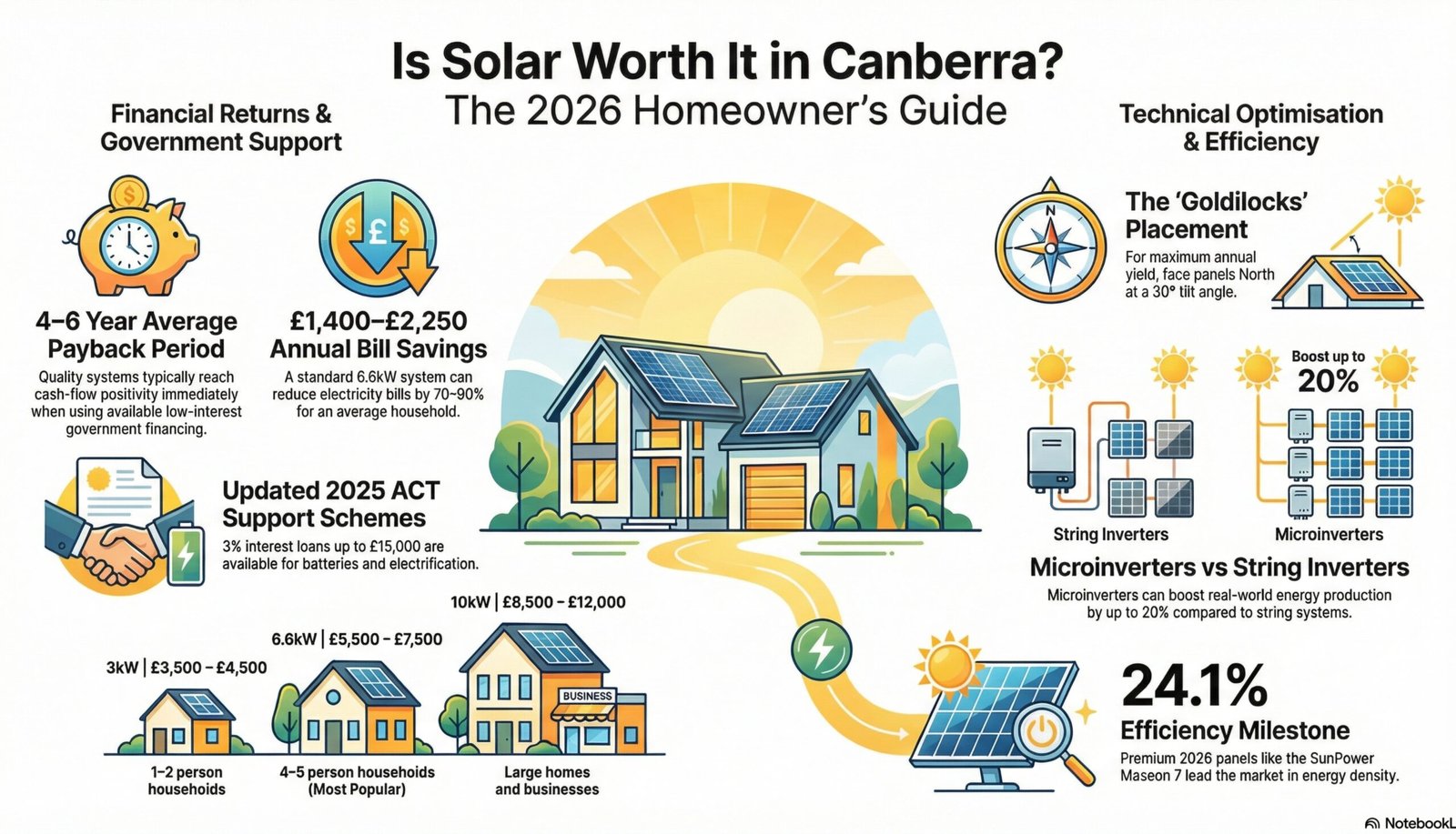
Solar panel installation costs in Canberra follow a general rule of thumb of approximately AUD $1,000 per kW installed for a quality system. However, prices vary based on system size, panel brand, inverter type, roof complexity, and installer fees. ACT-specific compliance and labour standards mean quotes can sometimes sit slightly higher than in other states, but the quality of workmanship is generally excellent.
The table below outlines average costs for the most common solar system sizes in Canberra after applying estimated Small-Scale Technology Certificate (STC) rebates in 2026:
| System Size | Avg. Cost (Before Rebate) | Est. Rebate (STC) | Net Cost (After Rebate) | Daily Output (kWh) |
|---|---|---|---|---|
| 3kW | $3,500 – $4,800 | ~$800 | ~$2,700 – $4,000 | 12 – 14 kWh |
| 5kW | $4,500 – $6,000 | ~$1,100 | ~$3,400 – $4,900 | 19 – 22 kWh |
| 6.6kW (Most Popular) | $5,500 – $8,000 | ~$1,357 | ~$4,143 – $6,643 | 24 – 28 kWh |
| 10kW | $7,500 – $10,500 | ~$2,000 | ~$5,500 – $8,500 | 38 – 42 kWh |
Factors That Affect Your Solar Installation Quote
Several key factors can push your final quote above or below the averages shown:
- Panel Brand: Panel brand and efficiency premium brands like REC, SunPower, and Tindo cost more upfront but deliver better long-term performance.
- Inverter Type: Inverter type standard string inverters are most affordable, while microinverters or hybrid inverters for battery-readiness cost more.
- Roof Orientation: Roof pitch and orientation north-facing roofs at an optimal angle get the best output; east/west-facing setups are still viable but may require more panels.
- Installer Quality: Installer reputation CEC-accredited installers may quote higher, but provide better workmanship warranties and compliance assurance.
ACT Government Solar Rebates and Incentives in 2026
One of the biggest advantages of going solar in Canberra is the layered incentive structure available to homeowners. Residents can often stack multiple rebates and loan schemes to dramatically reduce the out-of-pocket cost of their solar installation. Here is a comprehensive summary of all available incentives as of early 2026:
| Incentive Program | Amount / Benefit | Eligibility | Administered By |
|---|---|---|---|
| Federal STC Rebate | ~$1,357 (6.6kW in 2026) | All homeowners, systems ≤100kW | Federal Govt. / Installer |
| Home Energy Support Program (HESP) | Up to $2,500 (50% of cost) | Concession card holders | ACT Government |
| Sustainable Household Scheme (SHS) Loan | Loan $2,000–$15,000 (3% interest) | UV ≤ $750K (freestanding home) | ACT Govt. / Brighte |
| Next Gen Energy Storage Rebate | Up to $3,500 or 50% battery cost | ACT homeowners & businesses | ACT Government |
| Cheaper Home Batteries Program | Federal battery rebate support | Solar + battery installations | Federal Govt. |
Federal Small-Scale Technology Certificates (STCs)
The Small-scale Renewable Energy Scheme (SRES) is the primary federal rebate available to all ACT homeowners installing solar systems up to 100kW. Canberra sits in STC Zone 3, with a rating of 1.382. For a 6.6kW system installed in 2026, this equates to approximately 34 STCs, worth around AUD $1,357 (at an STC market value of ~$39.90). Your accredited installer typically handles the paperwork and applies this as a direct point-of-sale discount on your quote. Importantly, the number of STCs decreases slightly each year as the scheme winds down toward its 2030 end date — making sooner installation financially advantageous.
ACT Home Energy Support Program (HESP)
The Home Energy Support Program offers eligible ACT homeowners a rebate of up to $2,500 (50% of total supply and installation cost) for rooftop solar PV systems. A second $2,500 rebate is also available for energy-efficient products such as insulation, heat pumps, or electric stovetops totalling up to $5,000. To qualify, you must hold a valid concession card (Pensioner Concession Card or Veterans’ Affairs Gold Card), attend a free online home energy workshop, and meet the property unimproved value (UV) threshold of $750,000 or below. Applications must be submitted before installation begins.
ACT Sustainable Household Scheme (SHS)
The Sustainable Household Scheme, facilitated by Brighte (the ACT Government’s lending partner), provides low-interest loans from $2,000 to $15,000 to help eligible ACT homeowners finance energy-efficient upgrades. As of July 2025, the scheme operates at a 3% interest rate over a repayment period of up to 10 years. Eligible products include solar PV systems, battery storage, heat pumps, EV chargers, and ceiling insulation. This scheme is not limited to a single purchase you can access it multiple times for different eligible products over the life of the scheme.
Next Gen Energy Storage Rebate
The Next Gen Energy Storage program provides rebates for residential and commercial battery storage systems — up to $3,500 or 50% of the battery cost (excluding GST), whichever is lower. This rebate can be combined with the Cheaper Home Batteries Program (federal) and the Sustainable Household Scheme loan, allowing savvy homeowners to significantly reduce battery storage investment. All battery products must be accredited by the Clean Energy Council (CEC) to be eligible.
Choosing the Right Solar System Size for Your Canberra Home
Selecting the correct system size is crucial for maximising your return on investment. Installing too small a system leaves you reliant on grid electricity, while oversizing can push up upfront costs unnecessarily. The right size depends on your average daily electricity consumption, the number of occupants, and whether you plan to add battery storage or an electric vehicle charger in the future.
- Small Homes: 3–4kW: Best for 1–2 person households with modest energy use and limited roof space.
- Medium Homes: 5–6.6kW: The most popular choice for typical 3–4 bedroom Canberra families. The 6.6kW system is the sweet spot that balances upfront cost, rebate value, and daily output.
- Large Homes / EV Owners: 8–10kW: Ideal for large households, homes with electric vehicles, or those running ducted heating/cooling systems. A 10kW system produces an average of 38–42kWh per day in Canberra.
Choosing the Best Solar Panels and Inverters for Canberra’s Climate
Top Solar Panel Brands for Canberra
Canberra’s mix of hot summers and cold winters means panels should perform reliably across temperature extremes. Look for panels with a low temperature coefficient (meaning less efficiency loss in heat) and high shade tolerance for winter morning frost conditions. Leading brands recommended for Canberra conditions include:
- REC Alpha: REC Group — high efficiency (up to 22.3%) and excellent cold-weather performance. Popular premium choice.
- Mid-Range Value: Jinko Solar & Trina Solar — reliable mid-range panels with strong efficiency ratings (19–21%) at competitive prices.
- Premium Performance: SunPower — one of the most efficient panels on the market (up to 22.8%) with a 40-year power warranty. Best for limited roof space.
- Budget-Premium: Longi Solar — excellent value-for-money option with proven durability and growing market share in Australia.
Inverter Types Explained
- String Inverter: String Inverters — most cost-effective option for unshaded, straightforward roof layouts. Brands include Fronius, SMA, and Sungrow.
- Microinverter: Microinverters — attached to each panel individually, ideal for roofs with partial shading or complex orientations. Enphase is the leading brand.
- Hybrid Inverter: Hybrid Inverters — designed to manage both solar panels and battery storage on a single unit. Ideal if you plan to add batteries later.
Feed-in Tariffs in Canberra: Maximise Your Solar Returns
A feed-in tariff (FiT) is the rate your electricity retailer pays you for surplus solar energy exported back to the grid. In Canberra, feed-in tariff rates vary by retailer and plan. To maximise your returns, it’s worth comparing plans before signing with an energy provider:
| Energy Retailer | Feed-in Tariff (¢/kWh) | Plan Type | Best For |
|---|---|---|---|
| Origin Energy | Up to 10¢/kWh | Solar Boost Plan | High feed-in users |
| EnergyAustralia | Up to 10¢/kWh | Solar Plan | High feed-in users |
| ActewAGL | ~6–8¢/kWh | Standard Solar Plan | Local ACT provider |
| AGL | ~6–7¢/kWh | Solar Saver | Competitive pricing |
Compare current ACT feed-in tariff rates on the Energy Made Easy comparison tool run by the Australian Energy Regulator.
To maximise the value of your solar system, aim to use as much of your generated electricity during daylight hours as possible — running dishwashers, washing machines, and charging devices during the day — before exporting surplus energy. Adding battery storage can shift this equation dramatically, allowing you to store excess daytime generation for evening use.
Solar Payback Period and Return on Investment in Canberra
One of the most common questions Canberra homeowners ask is: How long will it take for solar to pay for itself? In 2026, the typical payback period for a well-sized residential solar system in Canberra is approximately 4–7 years, depending on system cost, feed-in tariff rate, daily self-consumption rate, and grid electricity prices. After payback, your panels effectively generate free electricity for the remainder of their 25-year lifespan.
Based on industry data, a standard 6.6kW solar system in Canberra can save a household between $1,200 and $1,705 per year on electricity bills. Over a 25-year system life (after accounting for inverter replacement and minor maintenance), the cost of solar-generated electricity works out to approximately 4 cents per kWh compared to the current ACT grid electricity rate of around 28–36 cents per kWh. That represents extraordinary long-term value.
How to Choose a Solar Installer in Canberra
Choosing the right installer is arguably the single most important decision you’ll make in your solar journey. A quality installation will perform reliably for 25+ years; a poor one can underperform, void warranties, or even create safety hazards. Here’s what to look for when selecting a Canberra solar installer:
- CEC Accreditation: Always choose an installer accredited by the Clean Energy Council (CEC). CEC-accredited installers are required to follow AS/NZS standards and can process STC rebates on your behalf.
- Get Multiple Quotes: Request at least three quotes to compare pricing, component quality, and warranty terms. Canberra prices may be slightly higher than interstate due to local compliance requirements.
- Check Reviews: Check Google Reviews, ProductReview.com.au, and the CEC’s ‘Approved Solar Retailers’ list for verified customer feedback.
- Warranty Clarity: Confirm both product warranty (panels: 25 years; inverter: 5–12 years) and workmanship warranty (minimum 5 years). Local installers are more accessible for after-sales support.
You can verify CEC-accredited installers and approved solar retailers through the Clean Energy Council website.
Frequently Asked Questions (FAQs)
Q1. Is solar worth it in Canberra given the cold winters?
Absolutely. While Canberra winters are cold, solar panels actually perform more efficiently in cooler temperatures. The ACT receives over 2,800 sunshine hours per year, and even winter days provide enough sunlight for significant energy generation. A well-sized system will typically deliver strong savings year-round.
Q2. Can I stack multiple solar rebates in the ACT?
Yes and this is one of Canberra’s greatest advantages. You can combine the federal STC rebate with the ACT Home Energy Support Program rebate (if eligible), the Sustainable Household Scheme loan, and the Next Gen Energy Storage rebate for batteries, all on the same installation. Always confirm current stacking rules with the ACT Government before applying.
Q3. What system size should I install as a Canberra homeowner?
For most Canberra households (3–4 bedroom homes), a 6.6kW system is the most popular and cost-effective choice. It produces 24–28kWh per day on average, comfortably covering the typical household’s daily consumption, with surplus exported for feed-in tariff credits.
Q4. When do the ACT solar rebates expire?
The federal STC scheme is legislated to end in December 2030, with rebate values declining slightly each year. ACT-specific programs like the Home Energy Support Program and the Sustainable Household Scheme have their own funding cycles. To lock in maximum incentives, it is advisable to install sooner rather than later.
Q5. Do I need council approval to install solar panels in Canberra?
In most cases, standard residential rooftop solar installations in the ACT do not require development approval (DA), provided they meet standard guidelines on size, height, and placement. However, if your property is heritage-listed or your system is unusually large, you may need to check with Access Canberra before proceeding. Your CEC-accredited installer will typically advise on local compliance requirements.
Conclusion
There has never been a better time to invest in solar panels in Canberra. With outstanding sunshine hours, generous stacked incentives, falling system costs, and strong long-term savings, Canberra homeowners who make the switch in 2026 stand to benefit enormously. Whether you’re a first-time solar buyer or looking to upgrade an existing system, use this guide to compare quotes, understand your rebate entitlements, and choose a quality CEC-accredited installer. The sun is shining it’s time to make the most of it.