

Canberra homeowners increasingly wonder: is solar worth it in Canberra? With Australia’s capital experiencing 300+ sunny days annually and electricity prices continuing to rise, solar energy presents a compelling opportunity. The Australian Capital Territory offers unique advantages including generous government incentives, high solar irradiance levels, and progressive renewable energy policies. This comprehensive guide examines installation costs, potential savings, payback periods, and whether investing in solar panels makes financial sense for Canberra residents in 2026.
Understanding Canberra’s Solar Potential
Why Canberra Is Ideal for Solar Energy
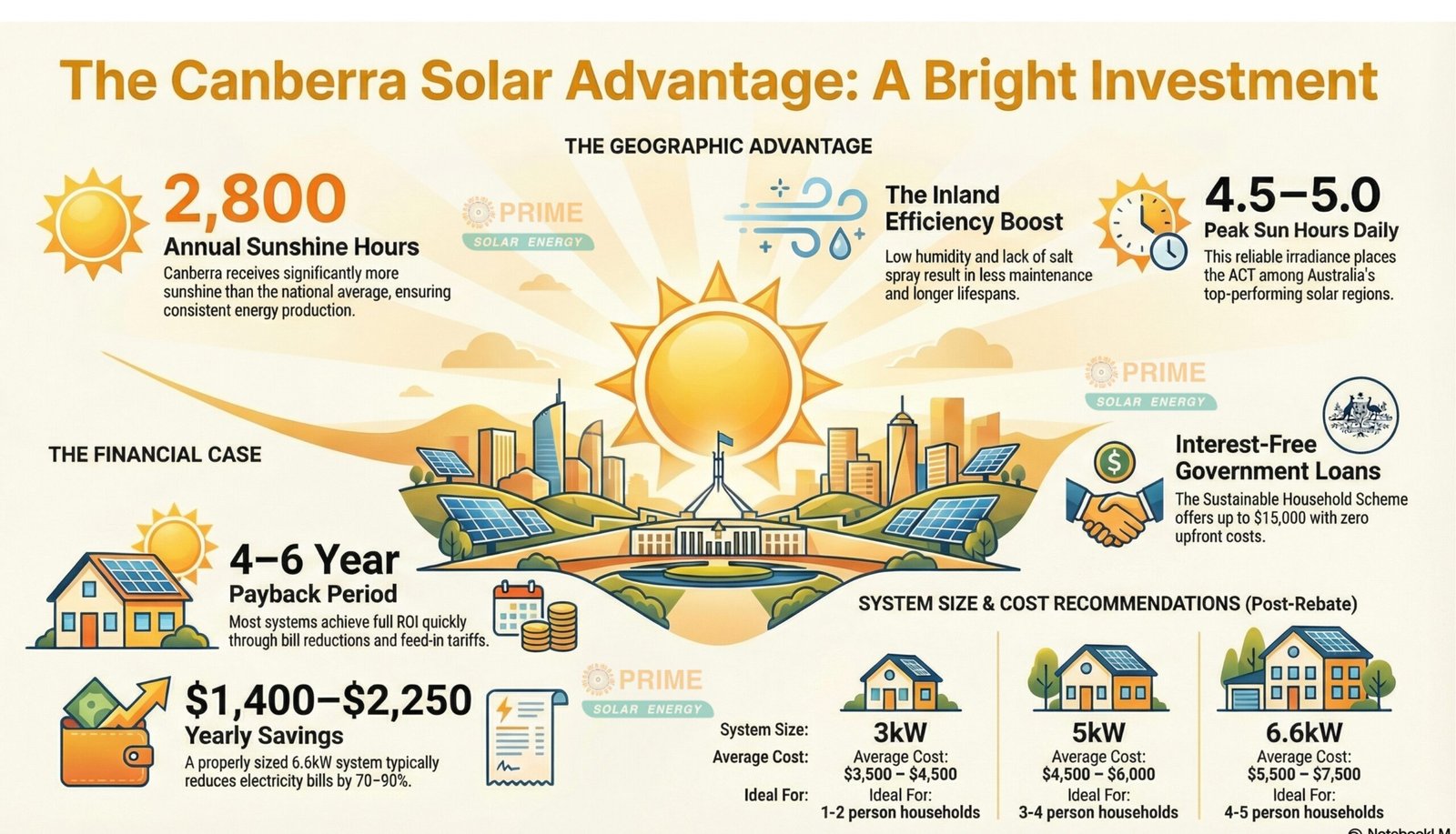
Canberra’s climate creates exceptional conditions for solar energy generation. The city receives approximately 2,800 hours of sunshine annually, significantly above the national average. According to the Bureau of Meteorology, Canberra’s clear, dry winters and sunny summers provide consistent solar exposure throughout the year. This reliable sunshine translates directly into higher electricity generation and faster return on investment compared to cloudier regions.
The ACT’s elevation and relatively low humidity further enhance solar panel efficiency. Unlike coastal areas where salt and moisture can degrade panels, Canberra’s inland location means less maintenance and longer system lifespans. These geographic advantages make solar installations particularly worthwhile for local homeowners.
Solar Irradiance Levels in the ACT
Canberra receives an average of 4.5-5.0 peak sun hours daily, placing it among Australia’s top-performing solar locations. This means a standard 6.6kW system can generate approximately 25-30kWh per day, sufficient to power most households completely. The consistent solar resource ensures predictable energy production and reliable savings year-round.
Cost Analysis: Solar Installation in Canberra
Average Installation Costs
Solar panel costs in Canberra vary based on system size and quality. Here’s a detailed breakdown of current market prices:
| System Size | Average Cost (After STC Rebate) | Panels Included | Ideal For |
| 3kW | $3,500 – $4,500 | 8-10 panels | 1-2 person households |
| 5kW | $4,500 – $6,000 | 13-17 panels | 3-4 person households |
| 6.6kW | $5,500 – $7,500 | 17-22 panels | 4-5 person households |
| 10kW | $8,500 – $12,000 | 26-33 panels | Large homes/businesses |
These prices reflect quality Tier 1 panels with reputable inverters and include professional installation. The Small-scale Technology Certificates (STC) rebate, administered by the Clean Energy Regulator, significantly reduces upfront costs, making solar more accessible to Canberra residents.
Additional Components and Upgrades
Beyond basic installation, homeowners should budget for potential upgrades. Smart inverters with monitoring capabilities add $200-$500 but provide valuable performance tracking. Panel optimizers, beneficial for shaded roofs, cost an additional $150-$200 per panel. Some homes may require electrical panel upgrades ($500-$1,500) to safely accommodate solar systems.
Financial Returns and Savings
Electricity Bill Reductions
The average Canberra household consumes approximately 18-20kWh daily. With electricity rates averaging $0.28-$0.32 per kWh, annual power bills typically reach $2,000-$2,500. A properly sized 6.6kW solar system can reduce these bills by 70-90%, saving $1,400-$2,250 annually.
Self-consumption rates significantly impact savings. Households using electricity during daylight hours maximize returns by consuming their solar-generated power directly. Families with daytime energy use patterns see payback periods of just 3-4 years, while those heavily reliant on evening power may experience 5-6 year payback periods.
Feed-in Tariff Benefits
Canberra residents benefit from competitive feed-in tariffs when exporting excess solar power to the grid. Current rates range from $0.08-$0.12 per kWh depending on your retailer. While lower than consumption rates, feed-in tariffs provide additional income streams, particularly valuable for households generating more power than they consume.
A 6.6kW system typically exports 30-40% of generated electricity, earning $300-$600 annually through feed-in credits. Combined with consumption savings, total annual benefits reach $1,700-$2,850 for average households.
Government Incentives and Rebates
ACT-Specific Programs
The ACT Government demonstrates strong commitment to renewable energy through various support programs. While the generous feed-in tariff scheme closed to new applicants in 2024, current incentives remain substantial. The federal STC rebate reduces installation costs by approximately $2,000-$3,500 depending on system size and location.
Additionally, Canberra homeowners can access interest-free loans through the Sustainable Household Scheme, providing up to $15,000 for solar installations. This program eliminates financial barriers, allowing residents to install solar with zero upfront costs and repay through manageable installments.
Tax Benefits and Depreciation
Small business owners and landlords can claim tax deductions for solar installations. The instant asset write-off allows eligible businesses to immediately deduct the full installation cost, significantly improving first-year returns. Rental property owners can claim depreciation over the system’s lifetime, reducing taxable income for years.
Return on Investment Timeline
Payback Period Calculations
Most Canberra solar installations achieve payback within 4-6 years. This calculation considers installation costs, annual savings, feed-in tariff income, and available rebates. Systems purchased through interest-free government loans often reach cash-flow positivity immediately, as monthly savings exceed loan repayments.
After payback completion, solar panels continue generating free electricity for 15-20+ additional years. Quality systems with 25-year warranties deliver lifetime savings exceeding $30,000-$50,000, representing returns of 300-600% on initial investment.
Long-term Value Proposition
Solar panels increase property values significantly. Studies indicate homes with solar installations sell 3-4% higher than comparable properties without solar. In Canberra’s competitive real estate market, this premium translates to $20,000-$40,000 additional value for median-priced homes, further enhancing the investment case.
Potential Challenges and Considerations
Shading and Roof Orientation
Not all Canberra homes are equally suitable for solar. North-facing roofs deliver optimal performance, while east and west orientations still achieve 85-90% efficiency. South-facing installations generate significantly less power and may not justify investment costs.
Tree shading presents the most common challenge. Even partial shading can reduce system output by 20-30%. Professional solar assessors provide shade analysis reports, helping homeowners understand realistic production expectations before committing to installation.
Battery Storage Considerations
Battery storage systems enhance solar value but add $8,000-$15,000 to installation costs. While batteries increase energy independence and provide backup power during outages, current prices mean extended payback periods of 10-15 years. However, battery costs continue declining, and future retrofitting remains possible as prices improve.
Frequently Asked Questions
How much can I save with solar panels in Canberra?
Average Canberra households save $1,400-$2,250 annually on electricity bills with a 6.6kW solar system, depending on consumption patterns and self-usage rates.
What size solar system do I need for my Canberra home?
Most 3-4 person households require 5-6.6kW systems. Larger families or homes with pools may benefit from 8-10kW installations for optimal coverage.
Are there any local Canberra solar rebates available?
Yes, Canberra residents access federal STC rebates reducing costs by $2,000-$3,500, plus interest-free loans up to $15,000 through the ACT Sustainable Household Scheme.
How long do solar panels last in Canberra’s climate?
Quality solar panels typically last 25-30 years in Canberra, with most manufacturers offering 25-year performance warranties guaranteeing 80%+ output.
Conclusion
Is solar worth it in Canberra? Absolutely. With exceptional sunshine, generous government support, rising electricity costs, and 4-6 year payback periods, solar represents one of the best home investments available. Canberra’s renewable energy commitment, combined with strong financial returns and environmental benefits, makes solar panels an increasingly smart choice for ACT residents looking to reduce costs while supporting sustainable energy futures.