When choosing a solar power system, selecting the right inverter is crucial for optimal energy production. Micro inverter and string inverter are the two most common types, each with its advantages and drawbacks. But what’s the best choice for your home or business in Canberra? Let’s explore both to help you make an informed decision. If you’re in Canberra, especially areas like Queanbeyan, Belconnen, or Woden, this guide will offer valuable insights into which solar inverter is best suited for your needs.
Solar power is an excellent renewable energy solution, and choosing the right inverter can significantly impact the overall efficiency and performance of your solar system.
What are Micro Inverters?
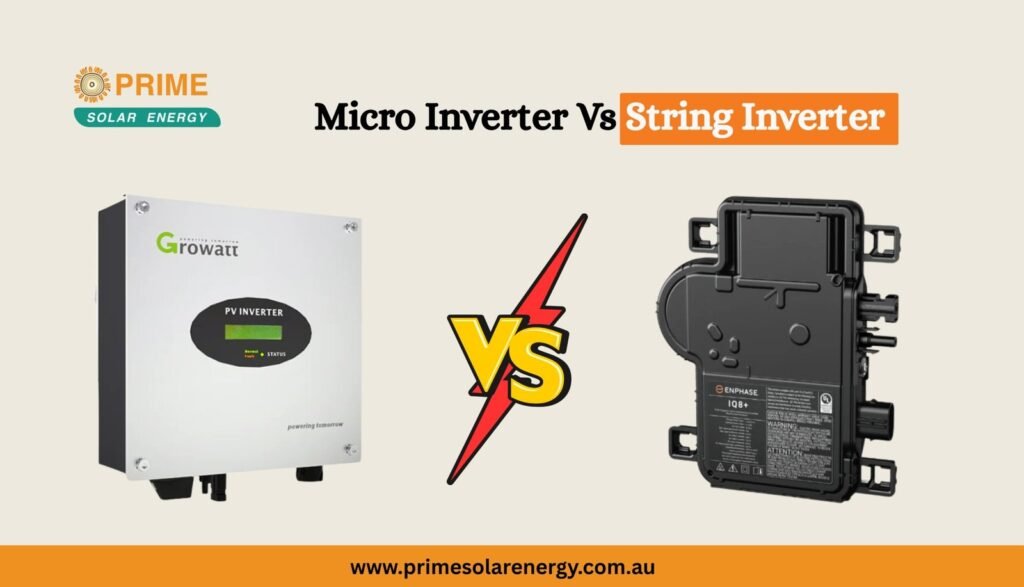
Micro inverter are compact, high-tech devices that are attached to each solar panel. They work by converting DC (direct current) power produced by each panel into AC (alternating current) power. This differs from the traditional method, where multiple solar panels are connected in series to a single inverter.
Advantages of Micro Inverters:
- Higher Energy Efficiency (in Shaded or Mismatched Panels): Each micro inverter works independently for each panel, ensuring that the performance of one panel does not affect the others. This is particularly beneficial in areas with partial shading.
- Better Performance in Shaded Areas: Micro inverters are less affected by shading. In real-world conditions, they can provide a 5-10% efficiency boost in situations with shading or panel mismatch.
- Scalability: Micro inverter allow for easy future expansion of your solar power system. You can add more panels without disrupting the entire system.
- Enhanced Reliability: Since each inverter operates independently, if one fails, it does not bring down the entire system.
Disadvantages:
- Higher Initial Cost: Micro inverters are generally more expensive than string inverters.
- Complex Installation: Installing multiple micro inverters can be more time-consuming and intricate compared to installing a single string inverter.
- Maintenance Challenges: Micro inverters are often mounted on the roof, which can make them harder to access and service.
What are String Inverters?
String inverters are the most traditional type of solar inverter. They work by connecting multiple solar panels in a series, which then feeds the DC power to a single inverter for conversion into AC power. This means the inverter handles the combined output of the entire series of panels, making it simpler but potentially less efficient under certain conditions.
Advantages of String Inverters:
- Lower Initial Cost: String inverters are less expensive compared to micro inverters, making them a cost-effective solution for many homeowners.
- Simpler Installation: With only one inverter to install, the process is faster and more straightforward.
- Reliability: String inverters are generally reliable and can serve well in installations where shading or panel failures are minimal.
- Easier to Maintain: Since string inverters are ground-mounted, they are easier to service and access for repairs or maintenance.
Disadvantages:
- Efficiency Loss in Shaded Areas: If one panel is shaded or malfunctioning, it can reduce the efficiency of the entire system. The performance of the other panels in the string will be impacted.
- Limited Expansion: Adding more panels to a string inverter system can be more complicated, and the system may require more complex modifications.
Micro Inverter vs String Inverter: Key Differences
In order to make an informed decision, let’s dive deeper into a detailed comparison between micro inverters and string inverters, which will help you determine which is best suited for your home or business in Canberra.
| Feature | Micro Inverters | String Inverters |
|---|---|---|
| Energy Efficiency | Higher (independent per panel, 5-10% more in shaded areas) | Comparable to micro inverters in ideal conditions (up to 98-99% efficiency) |
| Cost | Higher initial investment | More affordable initial cost |
| Maintenance | More complex (requires servicing of each unit) | Easier (one central unit, ground-level access) |
| Shading Impact | Minimal (only affected panel) | Significant (affects entire string) |
| System Expandability | Easier to expand with more panels | More difficult to expand |
| Installation Complexity | More complex due to multiple inverters | Simpler installation |
| Lifespan | 15-25 years per unit | 10-12 years (typical) |
| Warranty | 10-25 years per unit | 5-12 years per inverter |
| Monitoring | Allows panel-level monitoring (via app) | Provides array-level monitoring only |
When to Choose Micro Inverters
Micro inverters are perfect for homeowners or businesses in Canberra and its nearby areas like Tuggeranong, Belconnen, and Weston Creek who want to maximize energy production, especially in environments with partial shading. They’re also ideal for those who plan to expand their solar systems in the future since each panel operates independently.
Real-life Example:
In Queanbeyan, where many homes have trees that cause shading in the afternoon, micro inverters are the perfect solution. They help ensure that even if one panel is shaded, the others continue to operate efficiently, maximizing energy output.
When to Choose String Inverters
String inverters are a great choice if you are looking for a more budget-friendly option and have a roof that is completely free from shading. If your property in Canberra enjoys full sun exposure throughout the day, a string inverter can work well for you. It also provides a reliable option for simpler installations and lower maintenance needs.
Example:
In suburban areas like Woden, where there are minimal trees and no significant shading issues, a string inverter would be more than sufficient, providing a reliable and cost-effective solar solution.
Canberra Solar Incentives and Rebates
If you are considering a solar power system in Canberra, it’s important to be aware of the available incentives and rebates. The Australian Capital Territory (ACT) offers the Cheaper Home Batteries program, which provides up to $10,000 in rebates for home battery installations.
Additionally, there are feed-in tariffs in the ACT, typically ranging from 8-12¢/kWh, which can help offset your electricity costs. When selecting your solar inverter, keep in mind that micro inverters may be a better option for shaded properties, but hybrid inverters which combine string inverter efficiency with battery integration are also a popular choice due to their ability to store excess energy for later use.
Cost vs Value: Which is Better for Your Solar System?
When deciding between micro inverters and string inverters, the upfront cost is an important consideration. While micro inverters tend to cost more initially, they provide higher efficiency and better performance, especially in shaded areas. String inverters, though more affordable, can result in energy loss if one panel is affected by shading or damage.
In the long run, micro inverters can provide greater value for systems with partial shading, while string inverters may be more cost-effective in areas with consistent sun exposure. Here’s a rough breakdown of cost for a 6.6kW system:
- String inverters: $4,000 – $6,000
- Micro inverters: $7,000 – $10,000
While the initial cost of micro inverters is higher, the value they provide in terms of efficiency and scalability can outweigh the upfront cost, especially in shaded locations.
When to Call a Professional in Canberra
If you’re unsure which inverter system would best suit your home or business, or if you need help with solar system installation, it’s a good idea to call a professional in Canberra. At Prime Solar Energy, our team can assess your roof, shading conditions, energy needs, and budget to provide you with a recommendation that aligns with your goals.
Frequently Asked Questions (FAQ)
H4: What is the main difference between micro inverters and string inverters?
Micro inverters work independently for each panel, while string inverters connect multiple panels in series.
H4: Which inverter type is better for a shaded roof?
Micro inverters are the better choice for shaded roofs as they ensure that only the affected panel’s performance is compromised.
H4: Can I expand my solar system later?
Yes, micro inverters allow for easier expansion since each panel operates independently, while string inverters require more complex modifications.
H4: How do I maintain my solar inverter system?
Both systems require regular maintenance, but micro inverters might need more frequent checks due to the number of inverters.
H4: What’s the cost difference between the two?
Micro inverters are more expensive initially but can provide better performance in the long term, while string inverters are more budget-friendly.
H4: How long do inverters last?
Micro inverters typically last 15-25 years, while string inverters usually last 10-12 years. String inverters may need to be replaced sooner, which could lead to system downtime.
Conclusion
Choosing between micro inverters and string inverters largely depends on your specific needs. If you’re located in Canberra or nearby areas like Tuggeranong or Woden, Prime Solar Energy offers expert advice and installation services to help you select the best system. Whether you go for the higher efficiency of micro inverters or the affordability of string inverters, we ensure your solar system is optimized for performance.